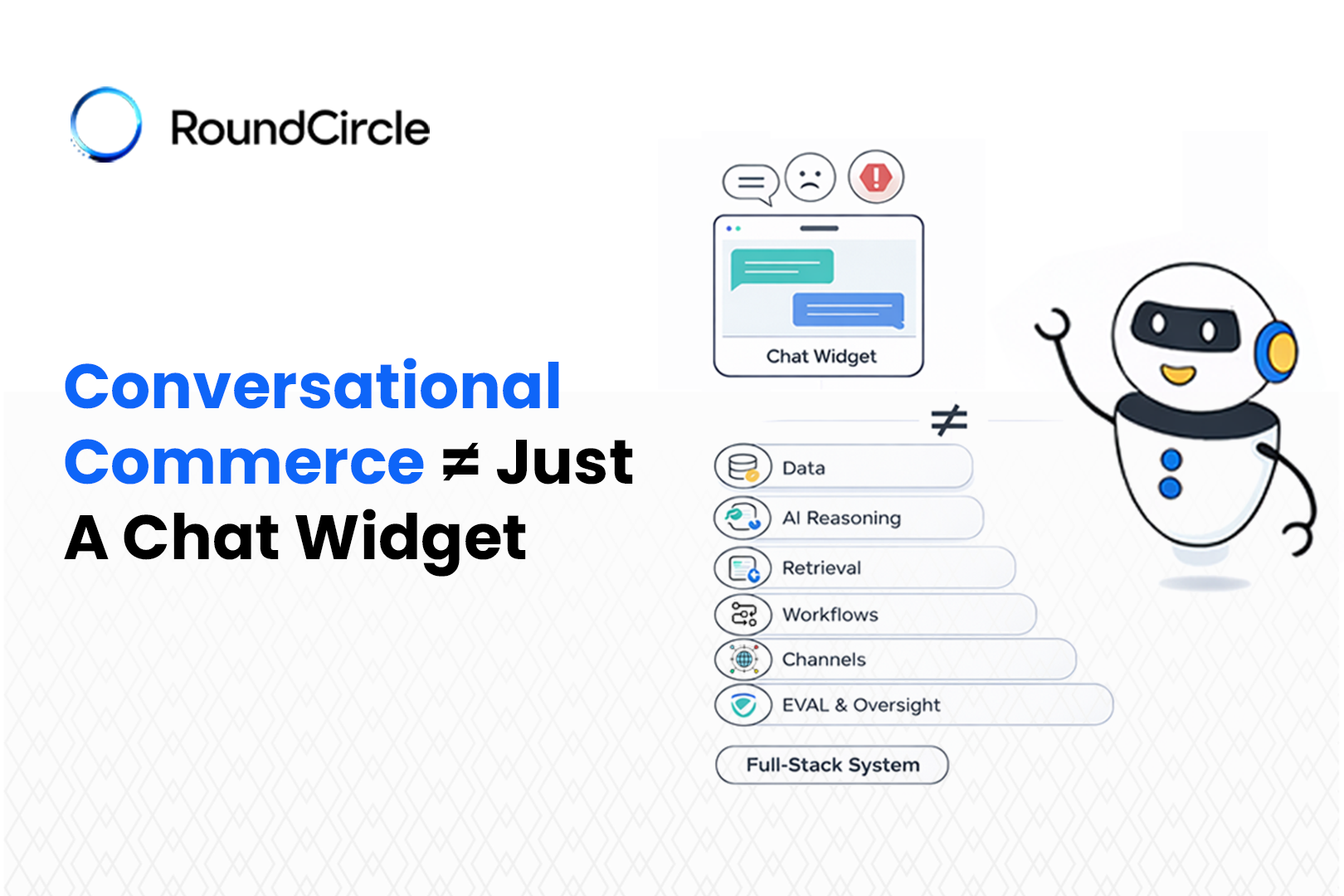
Most teams still treat conversational commerce as a chat window. Customers type questions, a bot replies, and leaders believe they have improved the experience. In practice, this approach creates confusion and leaves valuable revenue opportunities untouched. The result is a surface level upgrade instead of a system that improves discovery, conversion, and long term engagement.
Conversational commerce is not a widget. It is a full stack that combines data, reasoning, retrieval, workflows, channels, EVALs, and observability. This article clarifies the common myths and explains the reality behind systems that support predictable outcomes.
Myth 1: Conversational Commerce Means Adding a Chat Widget
Reality: It Requires a Full Stack
A chat widget is only the outer layer. The intelligence sits beneath it. Real conversational commerce depends on:
- structured product data
- retrieval methods that understand context
- reasoning engines that interpret intent
- workflows that complete tasks
- channel routing
- EVALs for quality
- observability for oversight
Without these pieces, the widget can only reply with text. It cannot help customers move forward. Conversational systems need support across the entire stack, which is why RoundCircle focuses on data, model development, and systems integration.
Myth 2: A Bot That Answers Questions Is Enough
Reality: Customers Need Systems That Complete Tasks
A bot that answers questions does not create real value. Customers need systems that perform actions. These actions include:
- checking orders
- processing returns
- modifying subscriptions
- comparing products
- confirming compatibility
- suggesting the right choices
Commerce is built on tasks, not answers. When a system completes steps inside OMS, CRM, or support tools, the experience improves and customers gain confidence. This is where conversational commerce begins to influence revenue. RoundCircle’s conversational AI capability supports these multi step tasks across channels.
Myth 3: All Conversational AI Uses the Same Model
Reality: Commerce Requires Custom Intelligence
Generic models fail when faced with catalog logic, conditions, variants, constraints, and region based rules. Commerce systems need:
- custom embeddings
- catalog reasoning
- tone alignment
- rule interpretation
- pricing context
- product relationships
Each brand has unique structure and logic. A single model cannot support all of them. Strong conversational systems depend on custom model development and structured retrieval methods. RoundCircle’s custom model work supports product reasoning and brand alignment across journeys.
Myth 4: RAG Alone Solves Product Search
Reality: Structured Retrieval Matters More Than Raw Answers
RAG retrieves information, but it does not understand structure. It treats catalogs as flat text. Commerce information is not flat. It contains:
- compatibility
- hierarchy
- relationships
- variants
- bundles
- conditions
Structured retrieval supports clearer, more accurate guidance. Leading AI consulting resources confirm this gap and highlight the role structured retrieval plays in multi step reasoning inside commerce systems. When RAG is paired with structured knowledge, conversational systems become more reliable.
Myth 5: Agents Run Themselves Once Deployed
Reality: Agents Need Observability and Governance
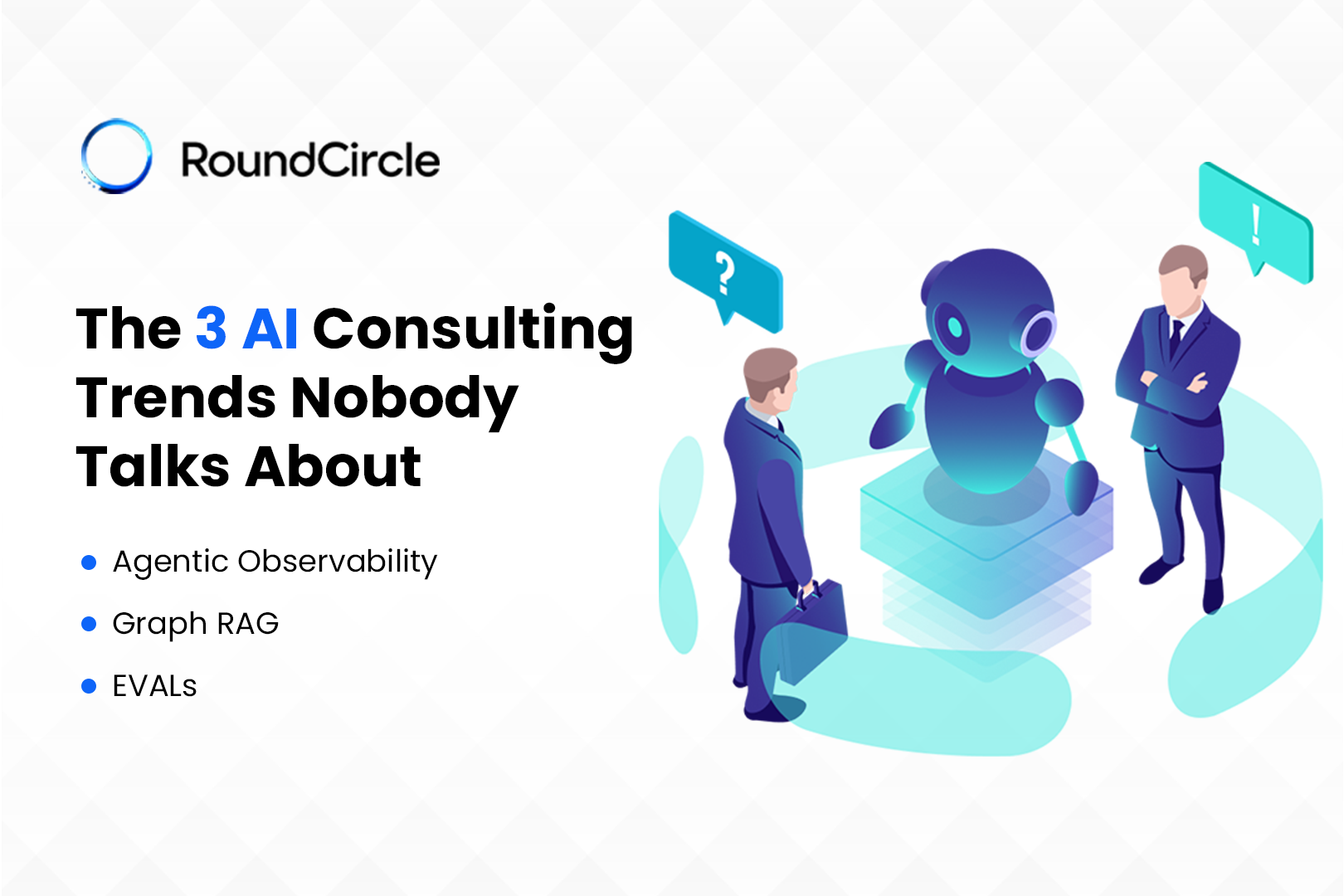
Agentic systems cannot be managed through guesswork. Observability allows teams to track:
- decisions
- missed steps
- wrong turns
- stuck states
- unexpected responses
Observability creates stability. It shows how agents behave inside real customer paths. This helps engineering teams refine retrieval, adjust workflows, improve reasoning, and maintain consistency across channels. RoundCircle treats observability as a core requirement for conversational systems.
Myth 6: Good Output Means the System Works
Reality: EVALs Confirm Long Term Reliability
A single good response does not indicate quality. AI systems need consistency across languages, regions, intents, and scenarios. EVALs help teams measure:
- accuracy
- tone
- safety
- reasoning strength
- policy alignment
Enterprises that rely on AI for sales or support need stable outcomes. EVALs give leaders confidence that changes will not cause unexpected behavior. Industry research shows that many AI consulting efforts fail because evaluation is not built into the lifecycle. EVALs fill this gap.
Myth 7: Conversational Commerce Is Only a CX Initiative
Reality: It Is a Revenue System
Conversational commerce supports more than service. It influences:
- conversion
- average order value
- repeat purchases
- subscription renewals
- product discovery
- decision speed
When the system guides customers with clarity, friction decreases and outcomes improve. Conversations shape revenue, not just support metrics. This is why RoundCircle helps brands build conversational systems that connect across data, workflows, and enterprise tools.
The Full Stack of Conversational Commerce
Conversational commerce becomes effective when all layers work together. These layers include:
- data quality
- structured retrieval
- reasoning engines
- workflows
- channel routing
- EVALs
- observability
- continuous improvement
A chat front end is the entry point, not the system. The performance depends on the layers beneath it. RoundCircle builds these layers so brands can support both simple questions and complex journeys.
Next Steps for Commerce Leaders
Senior leaders who want better outcomes should review their conversational systems with a clear view of the full stack. A chat widget alone will not improve discovery or conversion. A complete conversational architecture will.
Strong systems remove friction, support informed decisions, and help customers progress with confidence. This creates healthier revenue patterns and a more predictable customer experience.
To explore how RoundCircle can help build your conversational stack across data, retrieval, reasoning, workflows, observability, and EVALs:
Book a demo with RoundCircle to begin your conversational commerce upgrade.