
Most enterprises adopted chatbots expecting better support and conversions. Instead, they got static scripts disguised as intelligence.What they often received was a tool that answered common questions but struggled with anything complex. Customers needed real guidance while these basic bots frequently delivered generic replies that created more confusion than clarity.
In 2026, a growing number of companies are discovering that their chatbot cannot help customers explore products, compare options, follow multi step workflows, or complete high intent actions. The reason is simple. Chatbots respond, but they do not think. They cannot reason with product information, interpret intent, or complete tasks inside enterprise systems.
AI agents change this. They introduce reasoning, retrieval, and action, which allow them to support real commerce outcomes. This blog explains why traditional chat tools fail in sales driven journeys and how agentic systems create the type of conversational commerce that customers want.
Why Traditional Chatbots Fail Enterprise Commerce
Most chatbots work like branching trees. A customer asks something, and the bot follows a path built from rules or templates. This structure breaks the moment a question goes beyond what was planned.
Common issues include:
- Inability to interpret customer goals
- Difficulty understanding product relationships
- No access to detailed information that lives in other systems
- No ability to complete steps in workflows such as returns or product configuration
- No learning from past interactions
This leads to experiences that feel repetitive, frustrating, and static.
A simple illustration shows the gap clearly.
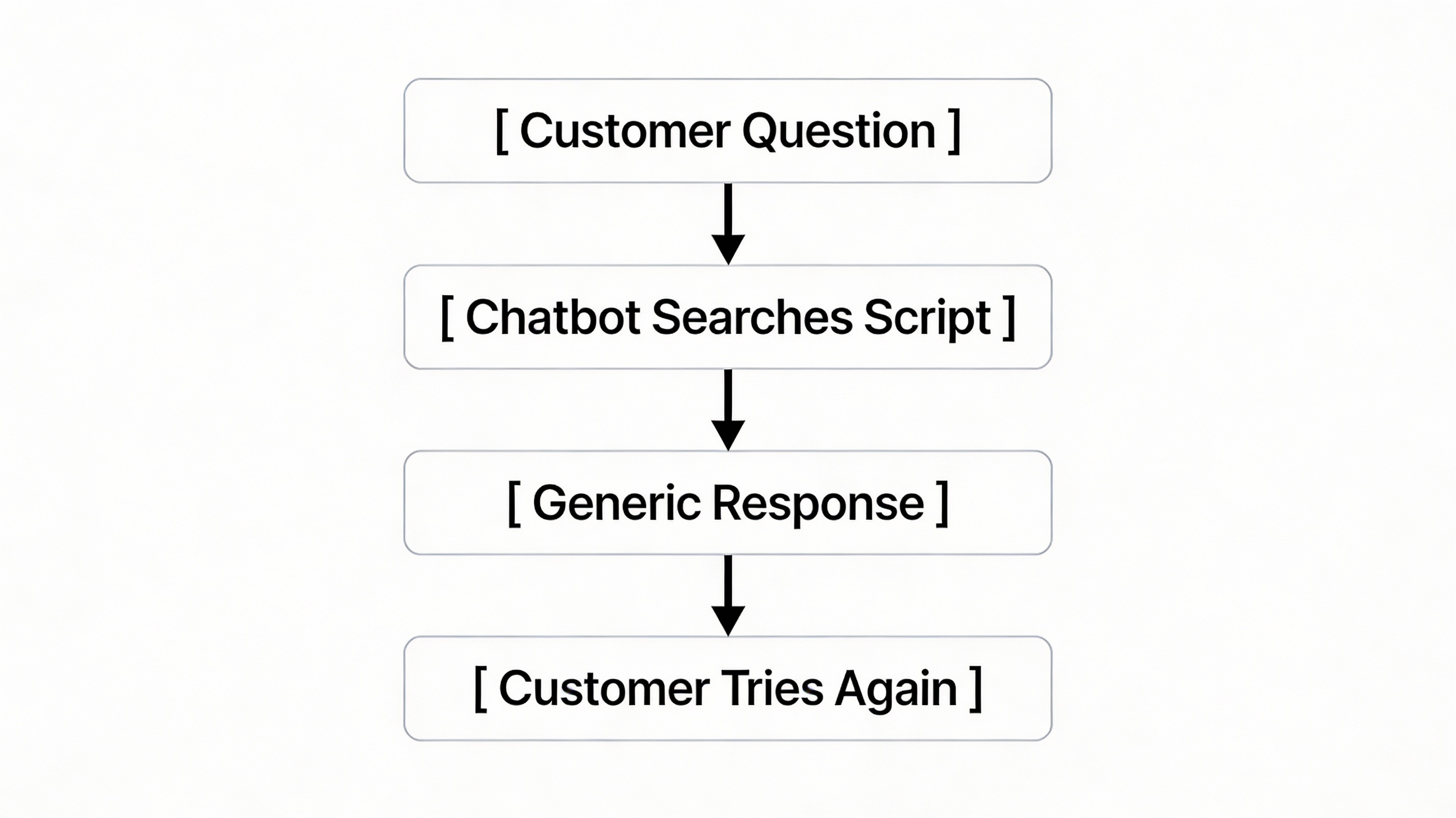
This loop is the core reason chatbots struggle to influence revenue. They cannot guide customers through discovery, comparison, or decision making.
That’s why more enterprise teams are replacing stagnant chat layers with real-time agentic systems, built to move customers from questions to action.
What Agentic AI Unlocks in Revenue Journeys
AI agents introduce three capabilities that traditional chat tools lack: reasoning, retrieval, and action.
Reasoning
Agents interpret the real intent behind a message. If a customer says, “I need something that works with my older device,” a traditional bot cannot help. An agent can interpret the requirement, consult compatibility rules, and provide relevant suggestions.
Retrieval
Agents can access knowledge stored across systems such as product catalogs, inventory, CRM, and past conversations. This allows them to respond with accurate and current information.
Action
Agents can complete steps within enterprise systems. They can start a return, adjust an order, check stock in specific locations, create bundles, or apply rules that influence pricing or availability.
Here is a simple view of how an agent works.
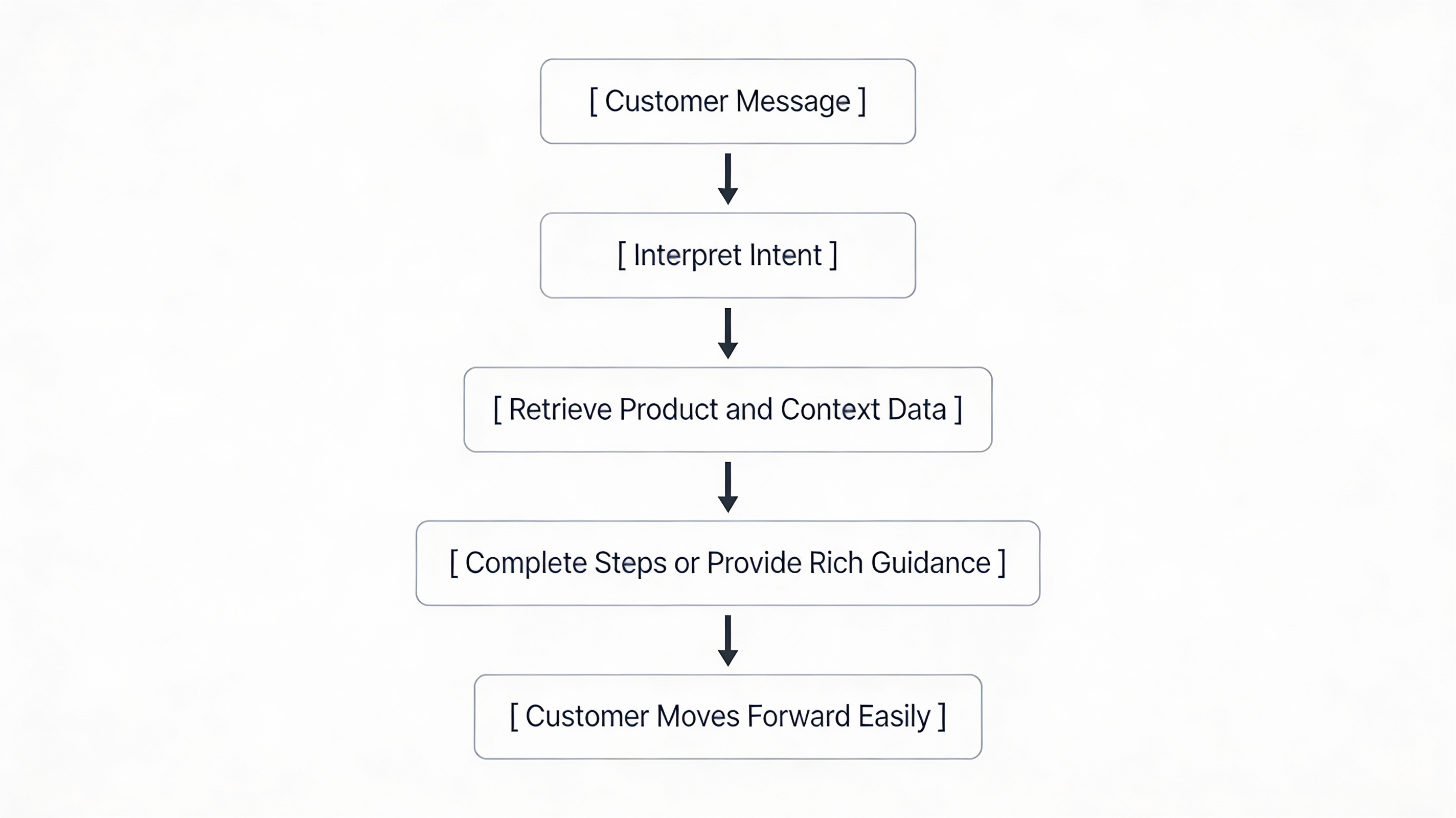
This improves every part of the buying cycle because the interaction becomes helpful, relevant, and accurate.
When the Buying Journey Breaks and Bots Can’t Fix It
Commerce flows require awareness of product structure, logic, availability, promotions, customer history, and multi step tasks. Chatbots break quickly because they cannot bring this information together.
Some common failure points include:
- They cannot compare similar products
- They cannot answer questions that require context
- They cannot adjust recommendations based on constraints
- They cannot connect one question to another
- They cannot follow the thread of a conversation
Chatbots were created for quick replies, not full experiences. As a result, they collapse when asked to facilitate transactions or guide a customer across multiple steps.
Industry research from AI consulting firms notes that enterprises often invest in chatbots without supporting architecture. This results in disappointing performance because the systems beneath the bot are not prepared. Businesses often report similar patterns across retail, telecom, travel, and consumer technology.
How Agentic Systems Improve Commerce Flows
AI agents work across the full customer journey. They support discovery, evaluation, and purchase decisions with consistent quality.
Key strengths include:
Discovering the Right Product
Agents understand product attributes, compatibility rules, and customer preferences. They can recommend items that match needs, stock levels, and budget.
Guiding Consideration
Agents retrieve reviews, compare models, answer technical questions, and help customers understand tradeoffs.
Supporting Decisions
Agents confirm availability, show delivery timelines, and clarify pricing or promotions.
Completing Tasks
Agents adjust orders, create returns, verify warranties, manage subscriptions, or support any workflow that requires system access.
This transforms support from transactional to trusted, and consistently moves customers toward purchase.
Why Agentic Systems Convert Better
Customers want clarity. They want guidance that reduces confusion and shortens decision cycles. Agentic systems provide this by offering the type of information and support that sellers would normally deliver.
When an agent can:
- Understand why a customer is looking for something
- Use detailed information from multiple systems
- Guide the customer through important steps
- Complete transactional tasks
The probability of conversion rises immediately.
This is the core reason enterprises are now adopting agentic conversational commerce. It removes friction and replaces it with clear, informed assistance.
Linking to RoundCircle’s Conversational AI Capabilities
RoundCircle builds agentic systems that help customers explore, compare, and act across digital touchpoints. The Conversational AI page on the RoundCircle site gives a complete view of how these systems work, including examples that show:
- Multi channel deployment
- Tailored reasoning for product catalogs
- Integration with enterprise data sources
- Continuous improvement through analytics and tagging
This strengthens the entire commerce experience from start to finish.
How Enterprises Can Begin the Shift
CPOs and CTOs can start with a clear plan.
Review Existing Data and Architecture
Most failures occur because product data, customer history, or system connections are scattered. A readiness review clarifies what is needed.
Identify High Impact Use Cases
Examples include product search, compatibility questions, comparison, subscription changes, or post purchase support.
Introduce AI Agents Alongside Existing Workflows
Agents do not replace systems. They work across them. Rollout can begin on a single channel before expanding.
Monitor and Improve Continuously
Conversation analytics help refine intent models, retrieval quality, and system actions.
Final Thought for the C Suite
Chatbots cannot guide customers through real buying tasks, and they cannot influence revenue with confidence. AI agents can. They support deeper conversation, better guidance, and complete workflows that matter in commerce.
Enterprises that adopt agentic systems gain an advantage because their customers receive accurate, supportive, and clear assistance every time.
RoundCircle partners with global organizations to create AI agents that support sales, improve customer satisfaction, and connect into the systems that drive business outcomes.
Let’s architect a conversational system that sells, solves, and scales.
Book a strategy call with RoundCircle’s AI consultants and see how agentic commerce can power your next wave of growth.